Life before the change
In the rural areas of Uruzgan, water is more than a resource. It is what decides whether a farm survives or struggles.
For Hassan Khan, a farmer from Trinkot, each day began with the same demanding routine—bringing water to his orchard by hand and trying to distribute it across his trees as best as he could. The work was exhausting and never fully effective. Some parts of the orchard received enough water, while others remained dry.
Despite long hours in the field, the results were uncertain. Farming required constant effort, but stability was never guaranteed.
A different way of working begins
Change came through the PALPA project, which supports vulnerable communities in Afghanistan to build sustainable livelihoods through agriculture, water management, and better access to markets.
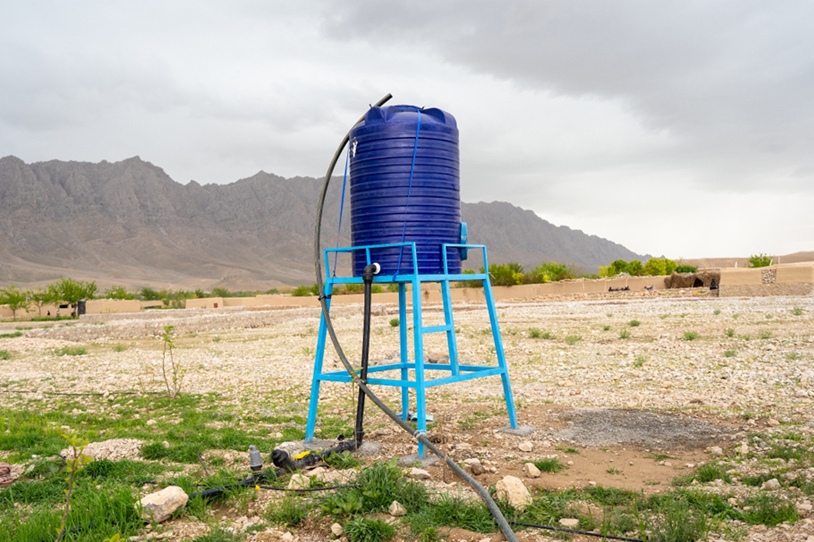
For Hassan Khan, the support arrived in the form of a simple but transformative solution: a drip irrigation system introduced through the project.
At first, it did not seem like something that would change much. But slowly, the difference became clear.
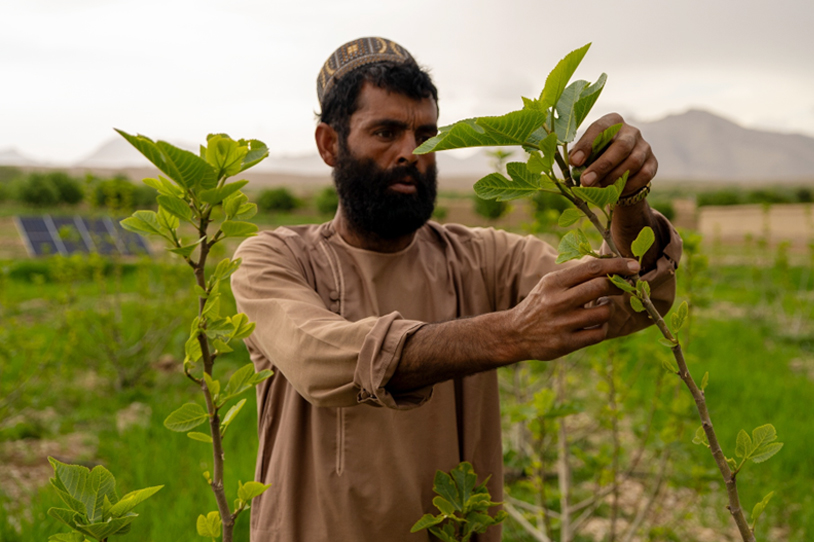
Water reaching every tree
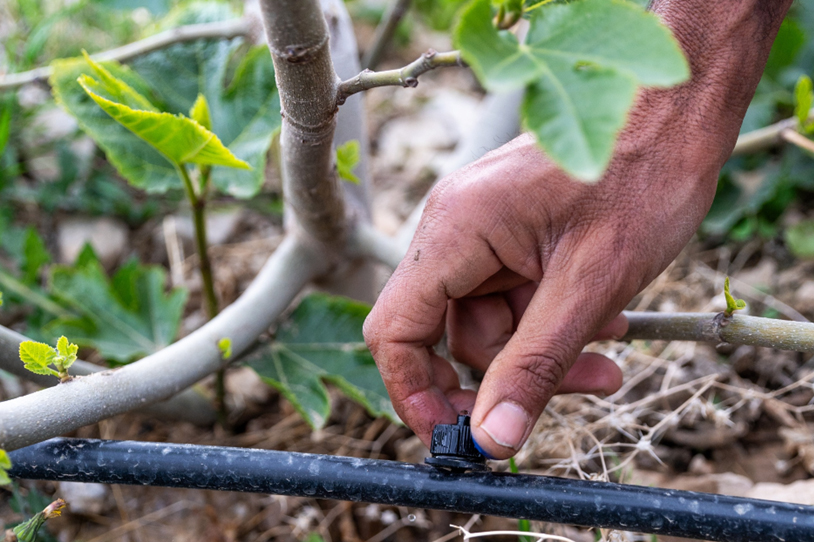
With the new system, water no longer depended on heavy labor and uneven distribution. The drip system reduced water use and made irrigation much easier. Now each tree receives water directly, without waste, and the whole orchard is covered properly. For the first time, irrigation felt controlled rather than uncertain. Water reached every part of the orchard more evenly, and less effort was needed to manage it. This reflects how PALPA enables communities to better use their natural resources for more stable and productive livelihoods.
From exhaustion to relief
Before the system, irrigation meant long hours of physical work under difficult conditions. Much of that effort did not translate into better results. Now, the process is simpler. Water flows where it is needed, and Hassan Khan no longer spends entire days struggling to manage it.
This shift has eased the physical burden on him and allowed more time for other farming and household responsibilities. Alongside such improvements, PALPA also supports farmers through practical training, helping them use new techniques effectively in their daily work.
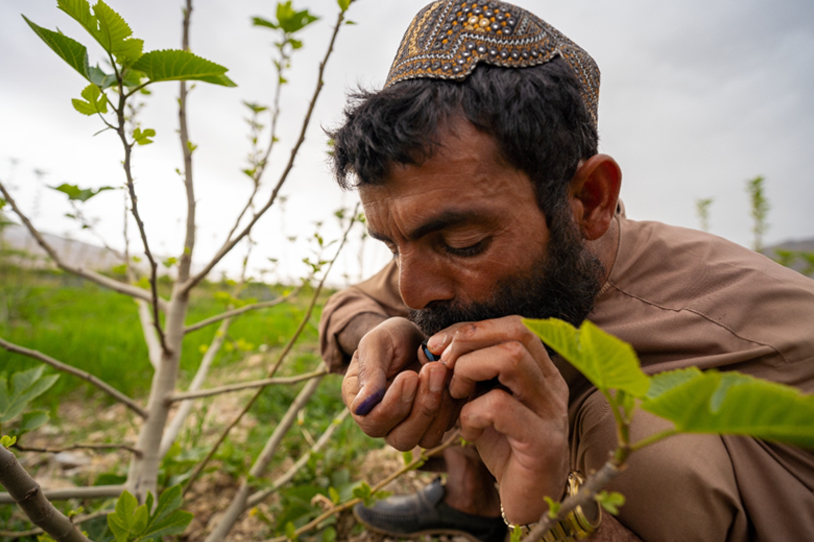
The drip system reduced water use and made irrigation much easier. Now each tree receives water directly, without waste, and the whole orchard is covered properly.
A more stable livelihood taking shape
The change in irrigation has also brought a sense of stability to Hassan Khan’s farming life. With better water use, his orchard is gradually becoming more reliable and easier to manage. For him, farming is no longer only about struggle—it is becoming something more predictable and sustainable. PALPA supports communities to move beyond short-term
coping toward more stable and diversified income sources, helping families build stronger economic foundations over time.
Others begin to notice
The difference in Hassan Khan’s orchard has not gone unnoticed. Farmers from nearby areas visit and observe how water is used more efficiently and how the orchard is managed with less effort. Some have started thinking about adopting similar systems for their own land. In this way, small changes are spreading through simple observation and shared experience.
Looking ahead
Today, Hassan Khan continues his work with greater confidence. His orchard is easier to care for, and the daily burden of irrigation has been significantly reduced.
Through interventions like this, PALPA helps communities strengthen their livelihoods by improving access to practical tools, knowledge, and water management solutions.
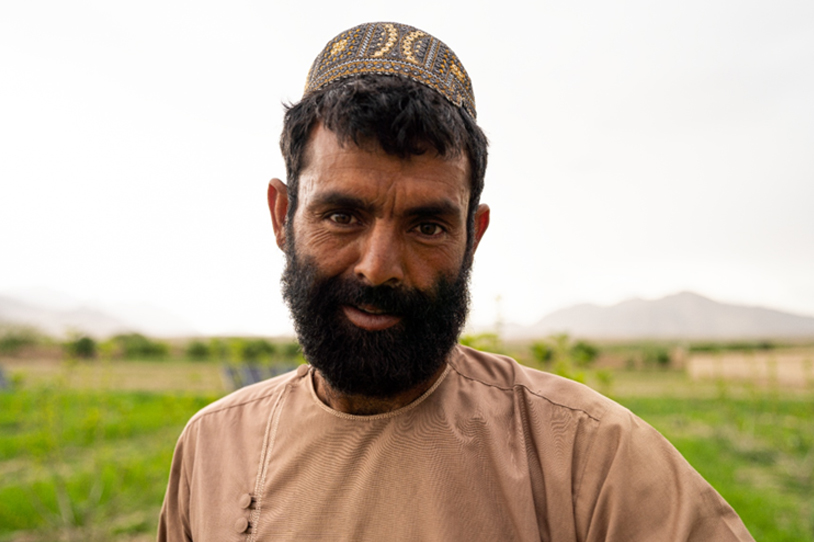
We are very pleased with this system. It has helped us save time and avoid waste.
For families like his, the change is not only about farming techniques. It is about moving toward a more stable and hopeful future—one where effort begins to bring more predictable results.
Passionate - Dedicated - Professional