Introduction: A Serenity Shattered in an Instant
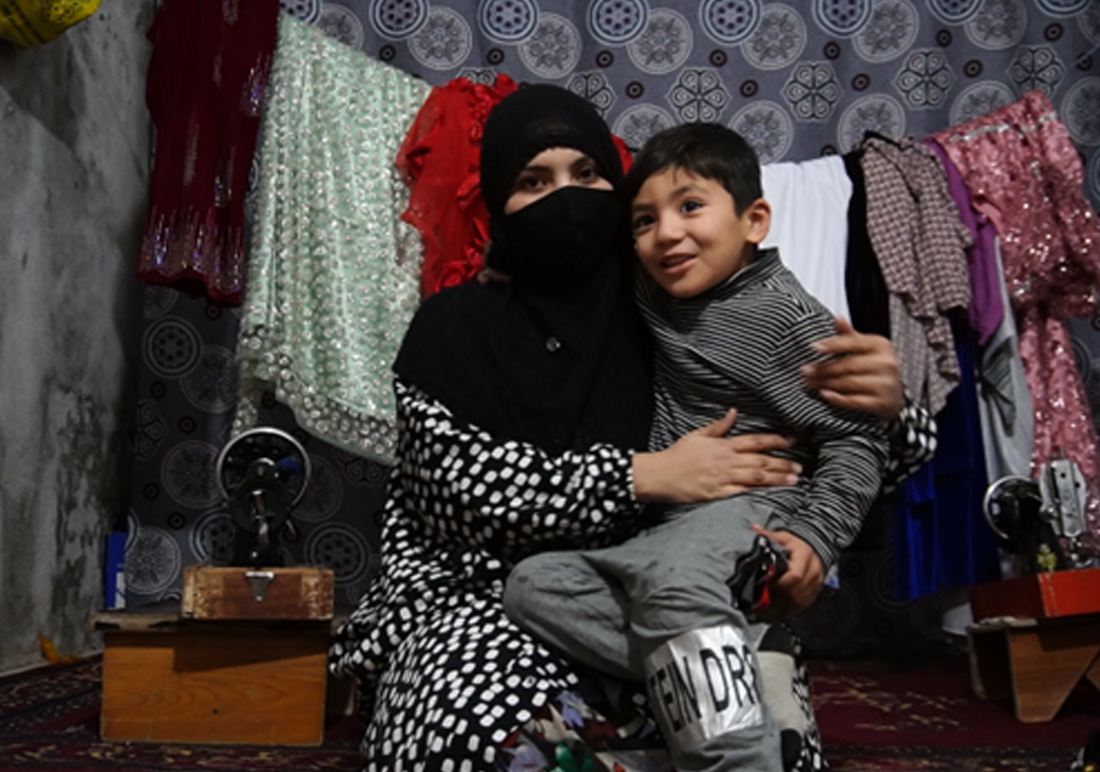
In the Zendeh Jan district of Herat, the sound of Samira’s sewing machine was part of the daily music of life. A skilled tailor and mother of four, her artistic hands not only stitched garments for her neighbors but, with every stitch, wove a quiet and stable future for her family. But this fragile peace was shattered in an instant.
Samira recalls those terrifying moments: “The earthquake hit two years ago; it was very severe. My husband said we shouldn’t wait for the house to collapse on us.” With that fateful decision, they left everything behind and, for the sake of survival, embarked on an irreversible journey to Mazar-e-Sharif.
The Struggle for Survival in a Foreign City
This forced migration marked the beginning of a new and arduous chapter of struggle. Samira recounts her first days with sorrow: “Life as a migrant was full of hardship. Our children had no food to eat, and everyone was just trying to survive. We couldn’t bring anything with us, only the clothes on our backs and our children.” A skilled tailor with her own machine in Herat, she now found herself in a strange city without even the most basic necessities of life, forced to borrow a pot from a neighbor just to cook a meal. This feeling of helplessness and alienation tormented her.
The family settled in a modest house, paying a monthly rent of 5,000 AFN, but even affording this amount was a struggle. Their children missed an entire year of school, and their future was shrouded in uncertainty. More than anything, the sense of loneliness and isolation weighed heavily on Samira: “At first, I didn’t know anyone, and I felt suffocated by loneliness.
Finding a New Family and an Opportunity for Change
Just at the peak of despair, a simple connection changed the course of Samira’s life. Through these same kind neighbors, she was introduced to the Women Economic Empowerment through Local Enterprise Development (WE-LEAD) project and HARAKAT. Samira eagerly joined the “Dunya” (World) savings group, which soon became more than just a financial fund; it became her new family in a foreign city.
With gratitude, she says: “I was so happy to join the Dunya savings group. Now, I know many people, and I don’t feel lonely or suffocated anymore. People treat me well and have been very welcoming.” This group not only rescued her from social isolation but also restored her lost self-confidence through valuable training in financial management and business skills.
Chapter Four: From a Borrowed Machine to a Personal Workshop
Samira, who had been working on a borrowed manual sewing machine with very little income, was able to secure a 10,000 AFN loan from the “Dunya” group. She happily states, “Thankfully, I received a 10,000 AFN loan and bought a second-hand machine with it.” This money was the capital for a new beginning, and she set up her small workshop in a corner of their rented home.
This small investment yielded great results. Samira’s exceptional skill in sewing a variety of women’s and children’s clothing—from traditional Afghan and Punjabi outfits to formal wear—quickly attracted numerous customers from the local community. She now had an independent income that allowed her to contribute to the expenses of their large 13-member extended family, supporting her husband who carried the main financial burden.
Chapter Five: The Return of Dignity and Hope for the Future
Today, Samira is no longer the displaced and hopeless woman she once was. She is an entrepreneur who proudly contributes to her family’s expenses. With a smile full of satisfaction, she says: “I cover my own children’s costs. I help my husband with our son’s school fees. I pay the electricity bill and buy books, bags, and notebooks for my children, and I contribute to other household needs as well.” This financial independence has given her a sense of dignity and strength she had been deprived of for years.
Her small workshop has now become a place of learning and employment for three other young women, extending her success to benefit several other families. Samira’s story is a remarkable example of how targeted support can aid not only in economic reconstruction but also in the social and emotional recovery of an individual after a disaster. She proved that even from the rubble, one can draw out hope and stitch a new life.
Passionate - Dedicated - Professional